Affordable Commercial CCTV Installation for Your Business: Cost, Benefits, and Solutions

Commercial CCTV installation refers to the professional design, placement, and integration of video surveillance equipment—cameras, recording systems, and monitoring services—into a business environment to protect assets and monitor operations. This guide explains affordable commercial CCTV installation services, transparent pricing ranges, practical system choices for small and medium businesses, and modern trends like AI analytics and cloud recording that influence value and lifetime costs. Many businesses need surveillance to reduce theft, support liability claims, and improve operational oversight, yet decision-makers often face budget constraints and uncertain choices about system type and monitoring. This article promises a clear cost framework, usable comparisons between IP, and wireless options, staged-install strategies, and actionable selection checklists to help you plan an effective, budget-friendly deployment. You will also find a focused explanation of how a commercial provider positions scalable, monitored solutions and what to ask when requesting quotes. The guidance here emphasizes affordability without sacrificing necessary features like reliable recording, remote access, and integration with alarms and access control.
What Is Commercial CCTV Installation and Why Is It Essential for Businesses?
Commercial CCTV installation is the process of selecting, placing, connecting, and commissioning surveillance cameras and recording systems to meet a business’s security and operational monitoring needs. It works by capturing continuous or event-triggered video that can deter crime, provide incident evidence, and enable remote visibility into operations; this combination reduces loss and improves response times. Businesses benefit through lower theft rates, stronger insurance claims support, safer work environments, and better compliance with regulatory requirements, especially in customer-facing or high-value inventory settings. The decision to install CCTV should follow a risk assessment focused on entry points, blind spots, and operational choke points where video evidence or live monitoring yields measurable returns. For organizations seeking a vendor, Reddi Security offers tailored commercial security systems with 24/7 monitoring, remote access, and scalable designs that align with these business outcomes.
Commercial CCTV systems include cameras, recording units (DVR/NVR), cabling or PoE power supplies, mounts, and monitoring services; together these parts create a layered physical security solution. Understanding these components helps businesses prioritize investment where it delivers the most value. The next section outlines the primary system types and practical considerations for choosing among IP, analog, wireless, and hybrid systems.
What Types of Commercial CCTV Systems Are Available?

Commercial CCTV systems typically fall into three categories: IP camera systems, wireless commercial cameras, and hybrid combinations that mix wired IP and wireless devices for flexibility. IP systems transmit video over a network to NVRs or cloud services and are preferred for high resolution, scalability, and analytics integration. Wireless cameras reduce cabling costs and simplify deployment in retrofit situations but can have bandwidth and reliability trade-offs; hybrids setups let businesses combine wired IP cameras with wireless units to manage costs and simplify upgrades over time.
IP systems offer high image quality and analytics integration for long-term scalability.
Wireless systems enable flexible placement and cost savings on cabling in specific use-cases.
Choosing the right type depends on desired image quality, existing infrastructure, analytics needs, and budget. The following subsection shows how these systems translate into tangible security and operational benefits.
How Does CCTV Enhance Business Security and Surveillance?
CCTV enhances security primarily through deterrence, evidence collection, and operational monitoring that reduce incidents and improve response. Visible cameras deter opportunistic theft and vandalism, while recorded footage supports investigations, insurance claims, and liability mitigation by providing a reliable chain of evidence. Operationally, video analytics and remote access reveal bottlenecks, unsafe behaviors, and customer flow patterns that businesses can act on to improve efficiency and safety. Integration with alarms and access control enables automated responses—for example, cameras can trigger recordings or alerts when access control events occur—thereby shortening incident response times and coordinating emergency services.
Deterrence and Evidence: Cameras discourage crime and supply clear recordings for investigations.
Operational Oversight: Surveillance data supports loss prevention and process improvement.
Integrated Response: Combined camera and alarm systems speed incident handling and document outcomes.
These mechanisms reduce risk and often deliver measurable ROI in reduced shrinkage and faster incident resolution, guiding the cost-benefit analysis in the following section.
How Much Does Commercial CCTV Installation Cost for Businesses?
Understanding cost starts with clear categories: equipment (cameras, NVR/DVR, storage), installation labor (mounting, cabling, network configuration), software/analytics, and ongoing services (monitoring, cloud storage, maintenance). Typical price ranges vary by system type and camera count, but businesses can expect a multi-component budget that balances upfront hardware with recurring monitoring and storage. Cost drivers include camera resolution and lens type, outdoor-rated housings, cabling length and complexity, networking upgrades, and whether analytics or cloud recording are required. To make costs transparent, below is a practical EAV-style table that links system type to typical price ranges and when to choose each.
Introductory summary: The table below clarifies typical price bands and the primary reasons a business would select each system type. Use this as a planning benchmark before requesting vendor quotes.
IP camera systems using NVR and PoE generally cost between $1,500 and more than $10,000, making them ideal for growing businesses that require high-resolution video, modern analytics, and easy scalability. Wireless camera kits, priced around $800 to $4,000, are well suited for retrofit environments, locations with limited cabling options, or temporary installations. Hybrid systems, usually in the $1,000 to $6,000 range, combine wired IP cameras with wireless cameras to balance performance and installation cost.
This table shows that small deployments can remain affordable, while advanced needs raise hardware and network costs. Strategies to lower initial spend include staged installs, mixed technology deployments, and choosing cloud storage tiers that match retention needs.
What Factors Influence Commercial CCTV Installation Costs?
Costs are driven by hardware specifications, installation complexity, networking and IT requirements, monitoring choices, and environmental protections. Hardware costs rise with higher resolutions (4K vs 1080p), wide dynamic range lenses, vandal-proof housings, and thermal or PTZ capabilities. Installation complexity grows if long cable runs, elevated mounts, trenching, or networking upgrades are required, which increases labor hours and materials. Ongoing costs include monitoring subscriptions, cloud storage fees, periodic maintenance, firmware updates, and potential licensing for AI analytics—each affecting total cost of ownership. Site-specific factors such as outdoor exposure, lighting conditions, and power availability also change equipment choices and installation methods.
Hardware specifications directly affect image quality and analytics capability.
Installation complexity scales with mounting locations, cable runs, and infrastructure upgrades.
Ongoing services such as monitoring and cloud retention create recurring costs.
Planning for these factors helps businesses budget realistically and decide whether to prioritize higher initial investment for lower lifetime costs or staggered purchases to spread expenses.
What Are Affordable Business CCTV Solutions?
Businesses looking to control upfront costs can adopt staged deployment or subscription-based monitoring models that convert capital expense into predictable operational fees. Staged deployment prioritizes critical coverage areas first—entry points, checkout zones, and high-value storage—then adds cameras later as budget allows. For cost-sensitive sites, hybrid solutions that combine a few high-resolution cameras with more basic units reduce expense while preserving essential coverage. Neutral vendor options allow businesses to compare proposals that balance one-time installation fees against monthly service plans.
Staged deployment controls initial spend while delivering immediate protection.
Subscription monitoring can lower up-front costs by rolling monitoring into recurring fees.
Reddi Security provides affordable, scalable commercial CCTV options and flexible monitoring models, pairing staged installations with 24/7 monitoring and remote-access tools to help businesses manage costs while maintaining essential surveillance capabilities.
Which Are the Best Commercial Security Camera Systems for Small and Medium Businesses?
Selecting the best system depends on business type, coverage needs, and desired analytics. Small retail outlets often prioritize high-quality indoor coverage with good low-light performance and a few exterior cameras; offices may value privacy controls, moderate resolution, and central management; warehouses benefit from wide field-of-view cameras, thermal detection for perimeter security, and analytics that reduce false alarms. Below is a comparison table linking common camera/system categories to features and practical benefits to aid decision-making.
Introductory note: Use this comparison to match camera capabilities to real business scenarios and prioritize features that deliver measurable risk reduction.
A fixed IP camera provides high-resolution imaging and uses PoE for streamlined installation, making it ideal for detailed indoor monitoring or focused cash-desk coverage with centralized recording. PTZ cameras add the ability to pan, tilt, and zoom, offering active perimeter monitoring and flexible tracking across large areas. Thermal cameras use heat-based detection, which makes them especially effective for night-time perimeter protection in warehouses, yards, and other low-light environments. Wireless cameras rely on wireless connectivity for quick setup, making them a strong choice for temporary deployments or retrofit locations where running cables is difficult.
This table highlights that no single camera type fits all needs; mixing types often yields the best balance between coverage and cost. The following H3s expand on the core trade-offs and essential features to prioritize.
How Do IP Cameras Compare to Wireless Cameras?
IP cameras typically provide superior image quality, easier integration with analytics, and simpler scalability through PoE networks. Wireless cameras remove many cabling constraints and speed up deployment, but they can face bandwidth limits and reliability issues under heavy network load. For most permanent commercial installs, IP is the recommended path, while wireless is best for retrofit areas or hard-to-cable zones.
IP: Best for long-term scalability and analytics.
Wireless: Flexible deployment with trade-offs in reliability.
Consider future-proofing by choosing systems that allow incremental upgrades from analog to IP where possible.
What Features Should Businesses Look for in CCTV Systems?
Essential features include reliable continuous recording, redundant storage or cloud backup, secure remote access, and tamper-resistant housings for exterior cameras. Value-adding features are AI video analytics (object detection, loitering alerts), low-light performance (IR or starlight sensors), encryption for footage in transit and at rest, and integration with alarms and access control for automated responses. Prioritize features by business risk: retail needs robust theft analytics and point-of-sale integration, warehouses require wide dynamic range and thermal detection, and offices prioritize privacy controls and role-based access to footage.
Core: Reliable recording, remote access, and secure storage.
Advanced: AI analytics, encryption, and integration with other security systems.
Operational: Ease of management and firmware update policies.
A feature checklist aligned to use-case ensures budget dollars fund capabilities that deliver measurable operational or security improvements.
What Are the Latest Trends in Commercial Video Surveillance for 2025?
Commercial surveillance in 2025 emphasizes AI-powered analytics, cloud-based recording, and integrated security platforms that combine cameras, alarms, and access control into centrally managed systems. AI analytics reduce false positives by distinguishing relevant events (people, vehicles) from environmental motion and provide operational insights such as queue lengths and footfall patterns that improve staffing and loss-prevention strategies. Cloud recording simplifies retention management and enables rapid scaling without large on-site storage investments, although it shifts cost to recurring fees and raises data security considerations. Integrated platforms streamline incident response and reporting through consolidated dashboards, improving situational awareness and ROI through reduced manual monitoring.
Introductory table: The following EAV-style table links key trends to business impact and a concise cost/benefit summary to guide investment decisions.
AI-driven video analytics are becoming a major trend, offering improved detection capabilities and valuable operational insights. Although these solutions often come with higher licensing costs, they help reduce false alarms and cut down on the need for dedicated monitoring staff. Cloud recording is also gaining traction because it provides scalable video retention and convenient remote access; while it lowers the need for onsite hardware, it does involve ongoing subscription fees. Integrated security platforms create additional value by centralizing control and speeding up response times, with implementation expenses often balanced out by more efficient operations overall.
These trends indicate a shift from simple recording to actionable intelligence, where higher upfront or subscription costs can be justified by measurable operational savings and risk reduction.
How Is AI-Powered Surveillance Transforming Business Security?
AI-powered surveillance automates detection and categorization of events—such as loitering, object removal, or crowd formation—allowing security teams to focus on verified incidents rather than continuous video review. This reduces false alarms and improves response times, adding operational value beyond pure security by informing staffing and layout decisions through analytics-generated metrics. AI models also enable anomaly detection that can surface unusual patterns indicating internal theft or process deviations. However, businesses must weigh AI licensing and accuracy trade-offs and ensure privacy-preserving deployment to meet local regulations.
Automation: AI flags relevant events and reduces manual review.
Operational metrics: Footfall and queue analytics inform staffing.
Risk: License and accuracy considerations require validation.
Appropriate AI use typically improves ROI when combined with human review workflows and clear event thresholds.
What Are the Benefits of Cloud-Based and Integrated Security Systems?
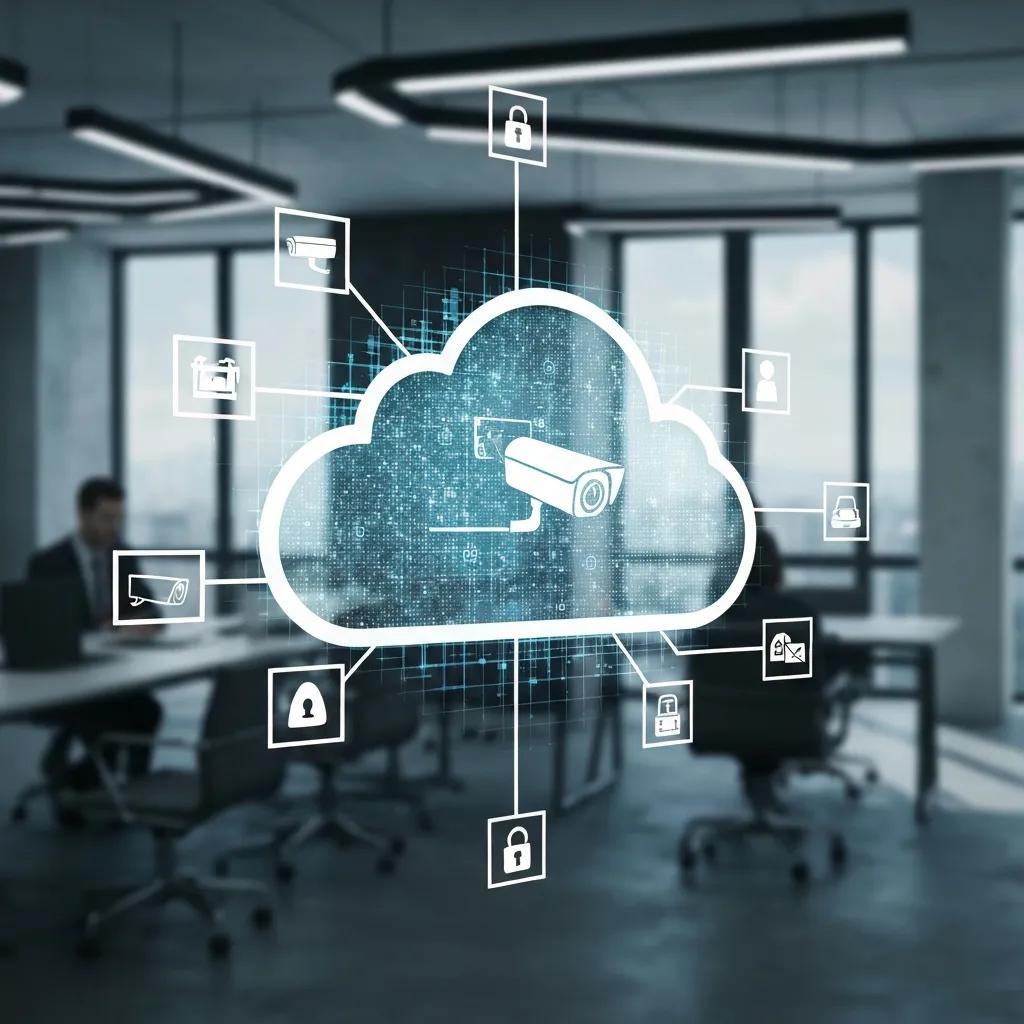
Cloud-based systems provide centralized storage, simplified firmware management, and scalable retention policies, reducing the need for on-site servers and enabling rapid deployment across multiple sites. Integrated security platforms unify video, alarms, and access control under a single management interface, improving incident correlation and simplifying compliance reporting. The trade-offs include recurring subscription costs, reliance on network connectivity, and the need for robust encryption and role-based access controls to protect footage. For multi-site businesses, cloud and integrated approaches frequently deliver operational efficiencies that outweigh higher monthly fees.
Scalability: Cloud enables quick expansion without major hardware changes.
Centralized management: Integration reduces siloed monitoring tasks.
Trade-offs: Ongoing fees and data-security responsibilities.
When selecting cloud or integrated options, specify encryption standards, retention policies, and access controls to align with compliance needs.
The security of data transmitted over public networks is a critical concern for cloud-based surveillance systems.
Secure Cloud-Based Video Surveillance Systems for Businesses
Utilizing cloud services in running large-scale video surveillance systems is not uncommon. However, special attention should be given to data security and privacy because, typically, data travels over insecure public networks. In this work, we propose an end-to-end security framework for a cloud-based video surveillance system that supports a large number of cameras. Our framework provides mutual authentication, session key management, data confidentiality, and data integrity. Consequently, encrypted video frames can only be sourced from authenticated cameras and only destined to authenticated cloud devices where the integrity of such frames can also be verified against potential change. As video streaming is a very delay-sensitive application, we study different variations of the proposed framework to find security options that achieve the best trade-off between the added delay and the security of the system.
A security framework for cloud-based video surveillance system, MA Alsmirat, 2017
How Does Reddi Security Provide Affordable and Reliable Commercial CCTV Installation?
Reddi Security positions its commercial offerings around tailored design, scalable deployments, and monitored solutions that align with business budgets and operational goals. Their approach emphasizes surveying client sites to recommend a mix of camera types and placements that prioritize risk areas first and enable staged upgrades as budgets permit. Reddi Security also incorporates 24/7 monitoring and remote access features so businesses can view live and recorded footage from mobile devices, supporting fast response and operational visibility without heavy on-site infrastructure. Pricing choices include options that balance upfront equipment costs with subscription services to smooth cash flow and meet affordability goals.
Reddi Security integrates cameras with alarm systems and emergency response workflows to create coordinated incident handling that reduces response times and improves documentation for insurance and compliance purposes. The company’s tailored solutions aim to minimize unnecessary hardware by focusing on strategic camera placement, leveraging hybrid system architectures where suitable, and recommending cloud or local storage aligned to retention needs. For businesses evaluating vendors, Reddi Security presents proposals that outline staged deployment plans, monitoring tiers, and scalability pathways so organizations can control initial spend while preserving upgrade options.
What Tailored Solutions and 24/7 Monitoring Services Does Reddi Security Offer?
Reddi Security provides tailored system design that maps camera types and counts to a business’s risk profile and operational needs, offering options for cloud or on-site recording and remote mobile access for administrators. Their monitoring services include around-the-clock alerting and response coordination with emergency services when required, and they support integration with intrusion alarms and access control to automate event-driven recordings and notifications. The vendor’s scalable approach lets businesses start with essential coverage and expand coverage as needs and budgets grow, ensuring early security gains without over-committing capital. This combination of tailored design, monitoring, and integration helps businesses meet both security and affordability goals.
Are There Case Studies Demonstrating Successful Affordable Installations?
Reddi Security documents projects showing measurable outcomes from affordable, staged installations that reduced shrinkage, improved incident resolution, and delivered compliance-ready recordings. Typical case summaries follow a problem → solution → results format, highlighting initial risk, the chosen hybrid or IP solution with monitoring, and post-install metrics such as reduced theft incidents or faster response times. These anonymized examples underline how targeted camera placement, coupled with 24/7 monitoring and remote access, produces tangible business value without requiring full-site upfront replacement. Businesses interested in detailed case studies or a tailored quote are encouraged to request a consultation through Reddi Security’s security-systems information channel to review comparable deployments and expected outcomes.
What Are the Most Common Questions About Commercial CCTV Installation?
This section answers the key buyer questions businesses ask when planning CCTV installations, covering selection, compliance, and next steps to request quotes. Clear, concise answers help decision-makers compare options and identify when to engage a professional installer versus considering limited DIY solutions. The final items include a practical selection checklist and compliance pointers to prepare for a procurement conversation or site survey.
How Do I Choose the Right CCTV System for My Business?
Choosing the right CCTV system begins with a risk assessment that identifies priority areas, loss drivers, and operational goals; this informs camera types, counts, and placements. Next, match desired features—resolution, low-light capability, analytics, storage retention—to those priorities to avoid overpaying for unused capabilities. Consider network capacity, whether cloud recording or local NVR makes sense, and plan staged deployments to spread costs while addressing critical coverage first. Finally, request detailed proposals comparing upfront hardware and installation fees with recurring monitoring and storage costs to determine true total cost of ownership.
Assess risks and coverage needs before selecting technology.
Prioritize features that directly address identified risks.
Compare TCO across upfront and recurring service models.
This structured approach keeps decisions aligned with budget and measurable security outcomes.
What Are the Compliance and Privacy Considerations for Business CCTV?
Businesses must follow local laws about recording in public-facing areas, data retention limits, and notice requirements such as visible signage that informs people of surveillance. Implement role-based access controls and audit logs to restrict who can view or export footage, and apply encryption for stored and in-transit video to protect privacy and meet regulatory expectations. Define clear retention schedules that balance evidentiary needs with legal limits, and document policies for footage access and incident handling to maintain compliance. Always consult jurisdiction-specific regulations and update policies as laws evolve to ensure responsible CCTV use.
Signage and notice inform subjects of surveillance presence.
Access controls and audit trails protect privacy and maintain accountability.
Retention policies and encryption reduce legal exposure and secure data.
Adhering to these practices reduces compliance risk while preserving surveillance value.